
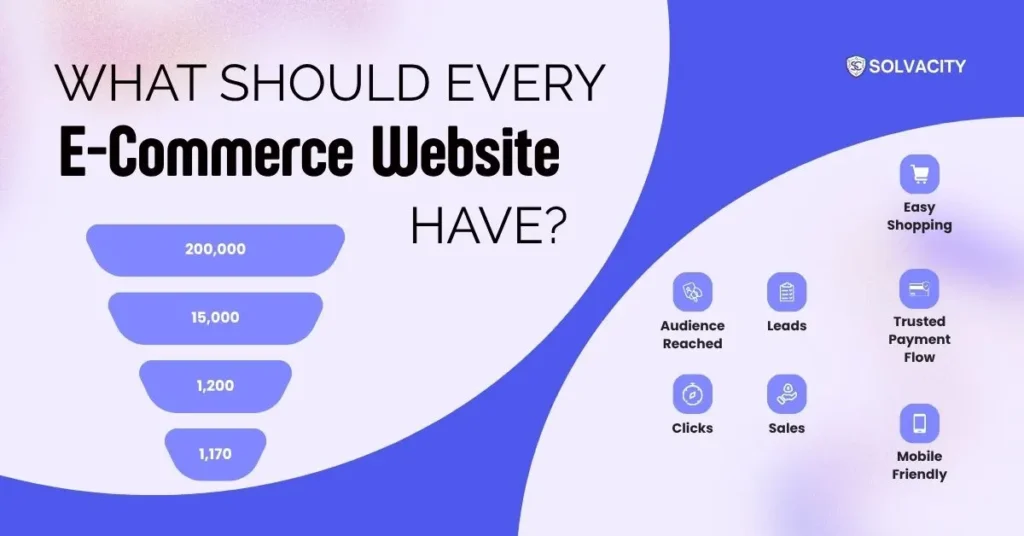
E-commerce stores may be full of high-quality products but still fail to generate sales. Perhaps the fault isn’t even the product. Probably the lack of a shopping experience might be the root cause. Customers want to find their desired item quickly; they want to know what they’re getting, and they want to buy smoothly, safely and with minimum fuss. That’s why ecommerce website features should be designed to meet real customer needs, instead of irrelevant and extra processes.
Easy to Find
A customer shouldn’t have to struggle to find what your store offers. Well-defined categories, intelligent searching, useful filters and intuitive navigation make visitors relax. The particular item among the broad selection they are looking for will come within their reach. Effective navigation plays a vital role in online store features. Different visitors have diverse backgrounds, thus different thoughts. Somebody can arrive on your site with an already convinced mind, someone could be a referred guy, and some people are fond of e-commerce online stores and compare the products. Your category arrangement should be feasible for every type of user.
Shopify’s existing guidance for e-commerce also talks about the visual clarity and sorting products logically, because the shoppers are not customers until they made a purchase that could be possible when they easily find what they are seeking otherwise they silently exit.
Enough Information
Have you ever checked your product pages and their layout? This is a place where the potential client makes the buying decision. Since shoppers aren’t able to touch any of the items shown on screen before they buy. Therefore, the page needs to compensate for this limitation. Practical features should make an e-commerce website’s product pages as informative as they can be. The set of information, like product title, description, clear images, bold price, available options, in-stock / out-of-stock, sizing variations, and delivery methods can all trigger calmness to buyer doubts.
Reviews, star ratings, comments and other trust signals might provide comfort. A product page should anticipate the possible questions a customer may ask before contacting the online store. Shopify recommends an existing product page for an e-commerce store to show key product info, snaps, price, variations, availability, and a clear call to action button.
Shopping on Mobile
Having a great desktop site can come back to haunt you on your phone. There may be some issues like: difficulty tapping buttons, extra-large product images, and too much scrolling to get the key information. Mobile-friendly is a top-of-the-list feature when it comes to the must-haves for ecommerce websites. Navigation, products, cart and checkout should be easy to find and navigate.
It needs to be quick. Consumers won’t tolerate long load times caused by heavy pictures, irrelevant scripts and poor elements of the page. Visitors shouldn’t have to endure load screens to see an item or get through the order process.
Simple Cart & Checkout
The customer has decided to buy, but the sale isn’t done. They must recheck the order, enter details, select delivery, and pay. A complicated checkout can raise doubts just when you should know they’re confident. Don’t distract. Display the order. Clarify shipping and delivery. Offer appropriate payment methods. Don’t request information you don’t need.
The checkout process is the last step in most online store journeys, and so, it should be focused on reducing and removing barriers to completing the purchase. Suggested guidelines from Shopify for online checkout pages include: a simple process, payment options, knowledge before buying, security, and reassurance.
Payment Follows Trust
Money is the most dangerous thing on earth. Everyone remains curious about their earned wealth. Thus, shoppers are afraid of sharing their payment details, especially with online e-commerce websites. To ease this fear, your website has to be a store of trust. Information such as contact info, policies, payment, reviews, returns and delivery can all make your store trustworthy.
Visitors need to feel confident when they’re looking for products. Visual design is also a factor. If an e-commerce web looks unpolished or poorly put together, shoppers may question the store’s trustworthiness. E-commerce store features have to take some of each.
Bridge Brand & Store
Your online store is a fragment of your business brand. It is a part of your business identity. The style, font, images, words, and several tiny elements should all be recognizable and familiar. A logo is one of those elements; a business that understands well about the difference between a logo and a brand will have more confidence in how its shopfront should look. They can make the best decision to make the brand successful and memorable.
We require uniformity so that when a customer views a web page, social media page, packaging, and even an advertisement, they can recognize the business. This gives the impression that the physical store is very separate from the business, which is neither organic nor a marketing channel.
Design The Post-Purchase Journey
“Customer experience” goes all the way through your checkout. Order confirmation, delivery & return notifications, customer care & enquiry follow-up, all influence the likelihood that a customer will return to shop again. A solid e-commerce platform will cover the entire shopping journey. You need to be able to communicate clearly what’s happening when an order is placed, and ensure the option for support in case something does go wrong.
And this even allows us to build a relationship. Your recommended useful, successful tips, loyalty benefits, valuable content, and really considerate follow-up can transform that one-time sale into a longer customer relationship. Our team at Solvacity.com is very experienced and professional and understands its value. We value quality over quantity.
Reasons to Remember
Having a great product and the right technology is not enough. Your customer still needs a reason to remember you. It could be your product itself, service, display, attitude, or maybe the total shopping experience. That’s the importance of having a unique, memorable brand experience.
A customer must be able to recognize your business without your logo. The tone of the store, look, quality, and required attitudes should be consistent throughout the buying process. So, what are the best e-commerce website features? Is it the most complex one? Well, no. They are the features that eliminate the guesswork, facilitate shopping, and foster confidence in your business.
Build the Store Around the Customer
A good online store doesn’t have everything, but it has the right things for its customers, its products, and its buying experience. Easy navigation attracts visitors to products. Good product pages answer questions. Mobile responsiveness helps people browse. A simple checkout minimizes friction. Trust elements reduce doubt. Consistent branding makes your business more recognizable.
SolvaCity can work with your business to develop an e-commerce site based on these core requirements instead of padding it out with unnecessary functionality. Your end result will be an online shop that is professional, well-functioning and designed to guide the customer all the way from finding you to completing a sale.